
Case studies/Example
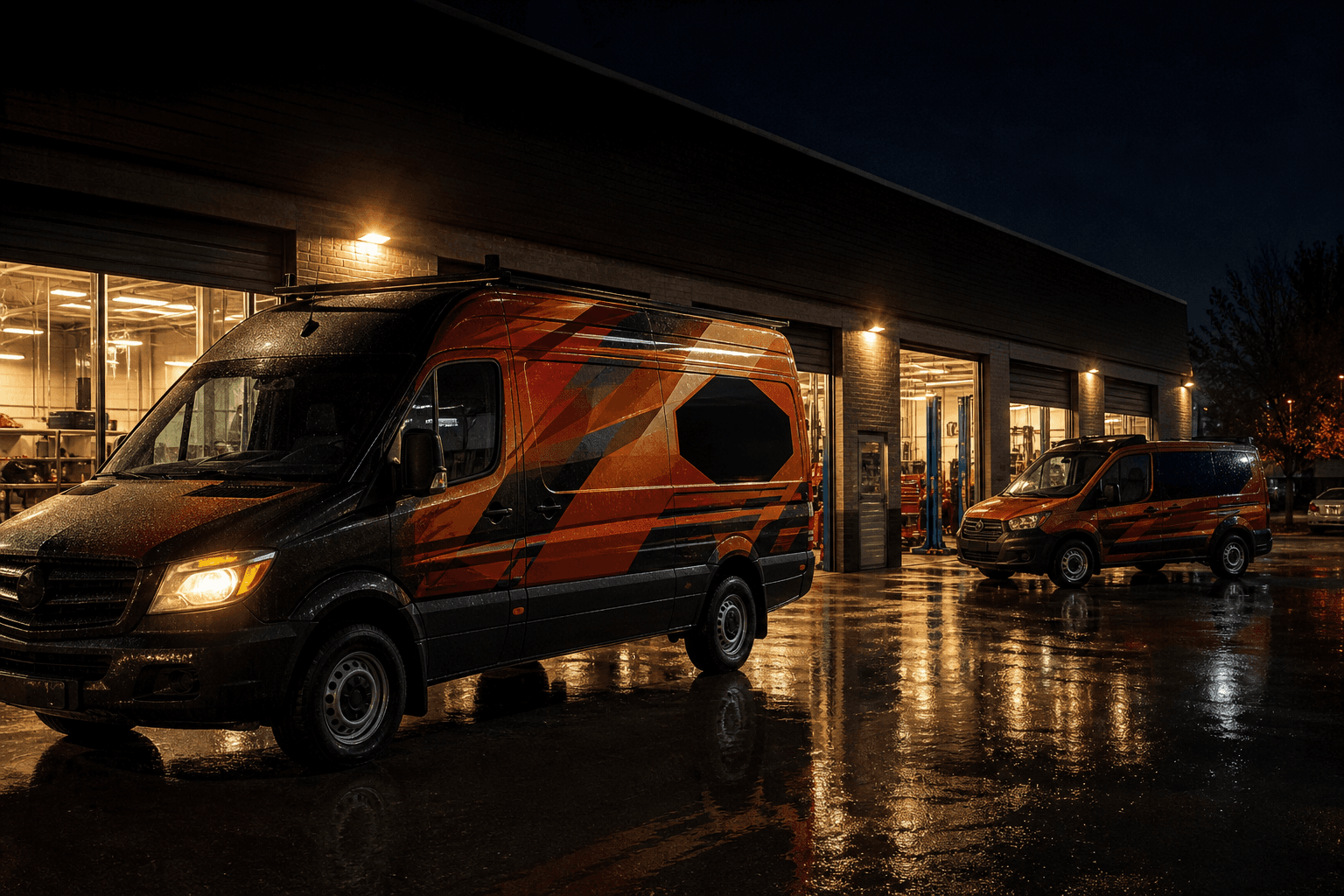
Ridge Mechanical: the van, the listing, and the site finally agree.
One trades client. Four services. A brand that finally matches how the trucks actually work.
Client
Ridge Mechanical
HVAC, plumbing, and emergency trades
Ridge Mechanical is a family-run HVAC and plumbing shop that lives on I-24 corridors more than on a downtown square. Techs start early, vans sit in a lot behind a metal building, and the phone still rings after dinner when a heat pump dies. The company already had work. It did not have a brand that survived a 70-mph glance or a 9pm Google search.
Problem
What was broken
Three vendors, three stories. The wrap shop used a clip-art flame. The website was a template with stock photos of a city Ridge does not serve. The Google profile still listed Saturday hours they had dropped two winters ago. Homeowners who saw the truck did not recognize the listing. People who found the listing did not trust the site.
Solution
How we treated it as one system
We treated Ridge as one system: mark and fleet first, then a site that books the same services the vans actually run, then a listing and local pages that match Rutherford County—not a national HVAC brochure. No AI chatbot on the homepage. Dispatch still owns the call. Digital just stops contradicting the truck.
Deliverables
The stack
Fleet wrap and shop mark so every van reads as Ridge at highway speed.
We rebuilt the mark for vinyl, not for a favicon. High-contrast type, ember on black, and a cab/box kit that stays readable when a van is dirty. Door numbers and a phone line sit where a driver actually looks—not in a decorative footer stripe that dies at 55 mph.
Service pages for HVAC, plumbing, and emergency calls with a path to book.
The site is a dispatch tool wearing a brand. Heat, air, plumbing, and emergency each get a page with the real offer, not a paragraph of lorem. Click-to-call and a short form sit above the fold on a phone. No fake testimonials. No stock skyline. Copy sounds like a shop that answers the radio.
Photos, categories, and a review loop that matches the actual service area.
We recategorized the profile, replaced empty interiors with yard and van photos, and set hours that match the door. Review asks go out after closed jobs—not a blast to the whole list. The map pack should look like the truck you just passed on Broad.
Local pages for the towns they actually run—without stuffing the homepage.
Murfreesboro, Smyrna, and La Vergne each get a page about the work Ridge does there. The homepage stays the company. Town pages stay the route. We did not clone one paragraph across thirteen cities. Search copy follows the jobs, not a radius tool.
Results
After the stack agreed
Example outcomes for this design pass: one visual system on every panel, service pages for heat, air, plumbing, and after-hours, a profile with current photos and categories, and town pages for the routes they already drive. Live metrics replace these notes when a real client ships.
Questions
Is Ridge Mechanical a live client?
No. This is an example case study so you can see how we write a multi-service engagement. Real names, photos, and numbers replace it when the work is ours to publish.
Why wrap, website, Google, and SEO together?
Trades brands leak trust when those four disagree. A homeowner sees the van on Old Fort, searches the name, and bounces if the listing or the site looks like a different company.
Do you only do this for HVAC shops?
No. The pattern fits plumbing, electrical, roofing, and other route businesses in Murfreesboro, Smyrna, and La Vergne—anywhere the truck is the billboard.
More case studies
Start a similar brief
Need more than one service?
Tell us the client, the stack, and the market—or start with a free audit. The form emails contact.us@merakidigital.io.
GET YOUR FREE DIGITAL AUDIT →