
Case studies/Example
The Lantern Room: a supper club that books after the floor goes dark.
Hospitality group, one voice: brand, site, social, and the booking follow-up behind it.
Client
The Lantern Room
Hospitality and private dining
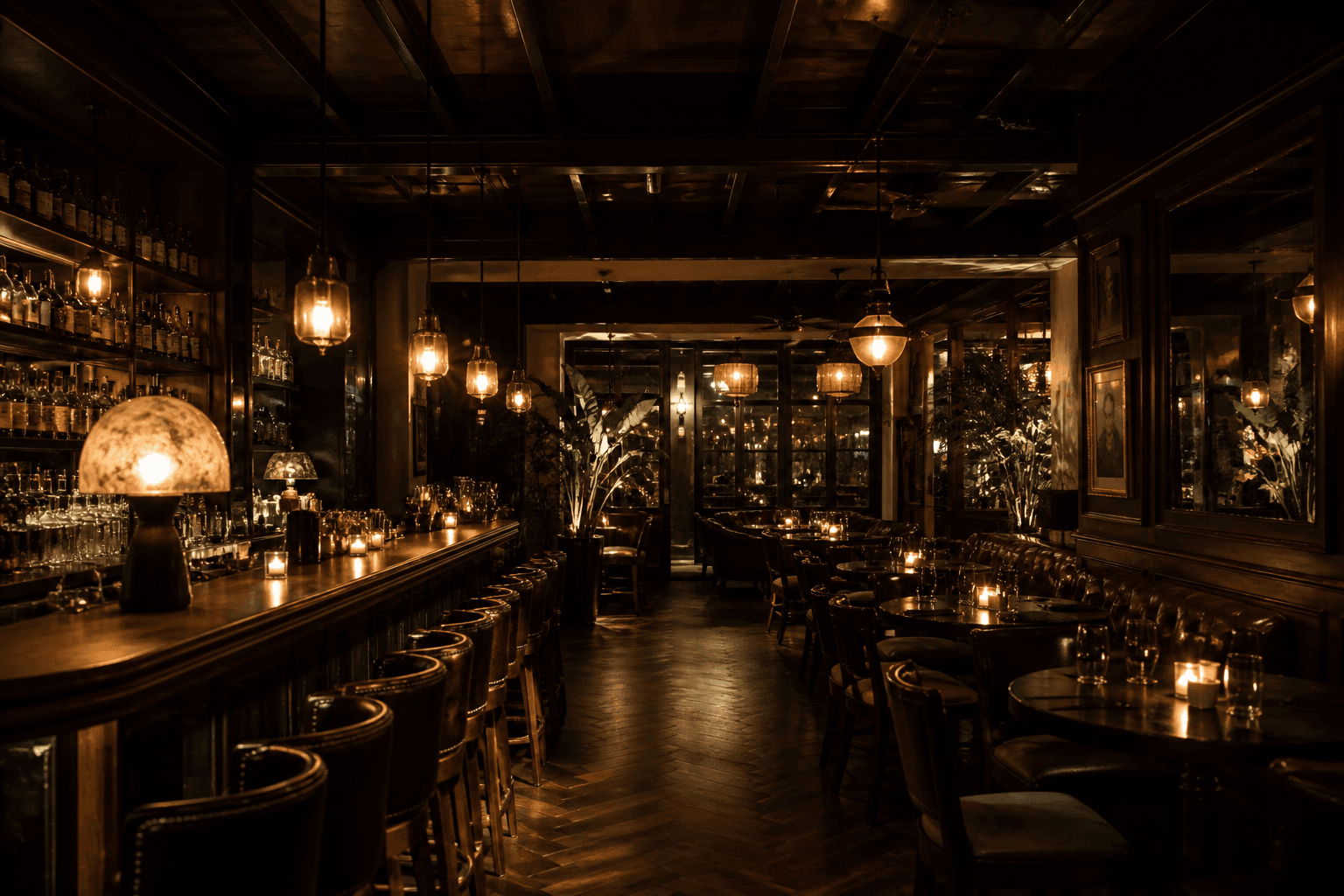
The Lantern Room is a dark, reservation-led dining room: low light, a short menu, private dining behind a curtain. Guests already dressed for it. The Instagram did not. Captions sounded like a tourism board, the site buried hours under a splash reel, and Friday inquiries sat in a shared inbox until the lunch shift on Monday.
Problem
What was broken
Hospitality dies in the gap between atmosphere and intake. The room photographed well. The brand files did not match the menus. Social posted whenever a server had a spare minute. The reserve path was a mailto: link. Private dining requests arrived as unstructured email with no floor-manager owner.
Solution
How we treated it as one system
We started with the mark and print so candlelight photos had a system. Then a site whose job is to book—not to win an awards page. Social got a weekly cadence that sounds hosted. Automation routes reservations and private-dining inquiries so the floor is not the CRM.
Deliverables
The stack
Mark, menus, and a dark visual system that holds in candlelight photos.
The mark is quiet: a lantern reduced to geometry, type that still reads on a matchbook. Menus, private-dining one-pagers, and story frames share one paper-and-ember palette. We designed for photographs taken at 9pm, not for a white-background logo sheet.
A booking-first site with hours, private dining, and a clear reserve path.
Hours, the menu, and Reserve sit where a thumb can reach them. Private dining has its own page with capacity and a form that asks the questions the floor actually needs. We did not hide the phone number. We did not autoplay a reel over the close.
A weekly cadence that feels hosted, not like a tourist board.
A shot list, a voice, and a rhythm: interiors, hands, and the room—not a carousel of every plate. Captions sound like a host, not a hashtag stack. The owner is not expected to invent Friday content at 4pm.
Reservation and inquiry routing so the floor is not the inbox.
Reserve and private-dining forms land in a queue with SMS to the manager on duty. After-hours replies set an expectation instead of silence. The dining room stays the dining room. Follow-up is a system, not a forgotten tab.
Results
After the stack agreed
Example outcomes for this design pass: one visual language from matchbooks to stories, a reserve path that works on a phone in a rideshare, a feed that does not look like leftover plate shots, and routing that answers Friday night before Monday. Real covers and response times replace these notes when we can publish a live room.
Questions
Is The Lantern Room a real restaurant?
It is an example hospitality brief. We wrote it so a multi-service case has a full page—not a tile. A live client study uses their name, photography, and numbers with permission.
Can you work with an existing chef-owner brand?
Yes. This study assumes we rebuilt the system. Plenty of rooms already have a mark we respect. Then the work is site, social, and routing that stop fighting the dining room.
Do you only do this in Nashville?
The studio is in Murfreesboro. The pattern fits Franklin, Brentwood, and other rooms that need restraint more than a launch video. We meet on site when the lighting and the menu have to be true.

Start a similar brief
Need more than one service?
Tell us the client, the stack, and the market—or start with a free audit. The form emails contact.us@merakidigital.io.
GET YOUR FREE DIGITAL AUDIT →